Repair Of Porcelain Restorations:
1. Protective eyewear must be worn by patient, operator and assistant. Protective gloves must be worn by operator and assistant.
2. Remove the glaze & bevel (45 degree) the porcelain around the area to be repaired. (Remove any old composite remaining from previous repairs.)
3. Isolate the area to be etched with a rubber dam. Barrier gel* should be placed where etching is not desired.
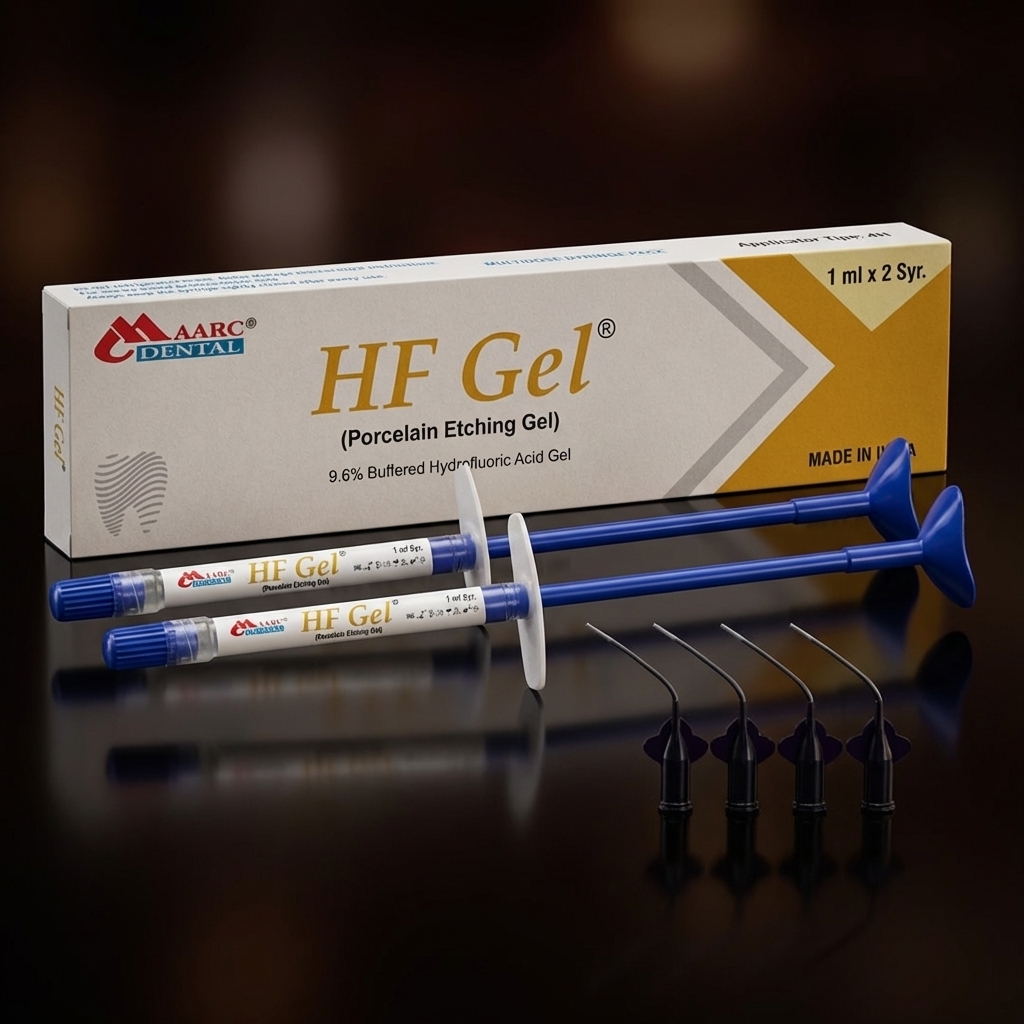
4. Remove cap from HF GEL, securely attach dispensing tip and verify etchant fow prior to applying intraorally. Apply HF GEL to the dry porcelain surface for 90 seconds. Continue to observe the etch site throughout the entire procedure. Use suction to remove the HF GEL, then rinse with copious amount of water and air dry. The etched surface should appear dull and frosty (if porcelain has a white/chalky appearance, agitate a moist microbrush on the porcelain to remove salt and debris created by etching, rinse and dry).
5. Apply one to two thin coats of silane bonding agent with a brush to the etched surface of the restoration and allow to dwell for 30 seconds. Dry with air syringe.
6. Apply an adhesive system according to the manufacturer’s instructions. Complete the repair with composite and fnish/polish.
PRECAUTIONS: Do not re-etch restorations that have been etched by the lab. Over etching porcelain may cause weakening of porcelain or degradation of bond strength.
HF GEL will microscopically roughen porcelain and glass surfaces.
As such, care must be taken to avoid having the etchant contact glazed porcelain surfaces since these surfaces will lose their gloss.
CONTRAINDICATIONS:
Interactions With Other Dental Materials: HF Gel will react with all material except material is made of rubber and Plastic. Care should be taken that HF gel does not contaminate other materials.
Adverse Reactions: No such Reactions Noted. Kindly communicate and inform manufacturer in details of any instance.








 COD PAYMENTS
  CUSTOMER SUPPORT
  FREE RETURNS
  FREE SHIPPING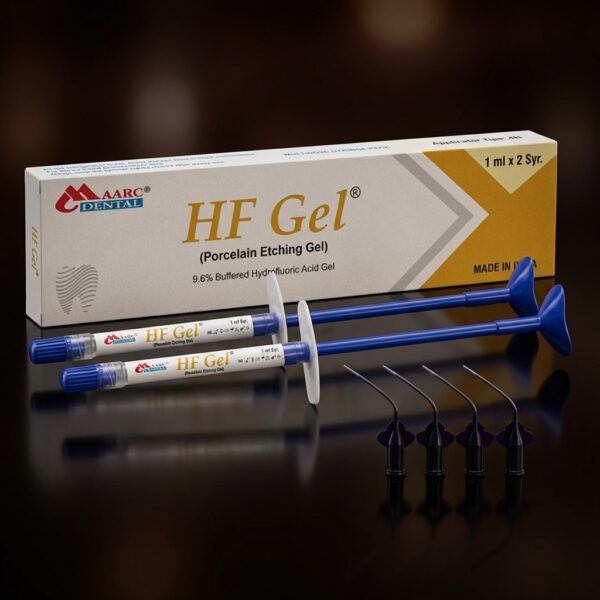
Reviews
Clear filtersThere are no reviews yet.